Koria Vault is in development at Lumikai Studio, and we are aiming to open the first realm in January 2027. This is the first time we have put a month in writing, so it is worth saying exactly what that date rests on.
The game is a medieval real-time strategy, and deliberately a classic one. You are a steward with a charter, a handful of settlers and a season’s grain. You raise a holding, you work out how to feed it, and then you find out who your neighbours are. There is no chosen one and no prophecy. The most dramatic thing that happens in your first week is probably a granary.
What is actually running
The economy is live end to end. Timber, stone, food and iron each run a full chain from the ground to the thing you wanted, and none of them is special-cased in code — iron was six new definitions and no new logic. Construction is worker-driven, so three builders finish in a third of the time and nobody finishes at all. Research works. Hunting works. The chronicle writes to you only when you could have acted on what it says.
What is not built is the war. One unit exists — the villager — and the armoury is written down and deliberately parked. That is the single largest piece of work between here and January, and it is the reason the date is a window rather than a promise.
The State of the Vault page lists every system and whether it is live, designed or undecided. It is maintained as the honest version, and it is the page to read if this one sounds too comfortable.
The story is being written, not generated
Long before any of us, something was built in this country that nobody now can build. Roads that run straight through mountains they should have gone around. Cut stone with no seam. Wells that still give clean water where nothing else does.
Whoever did that did not fall to an enemy. They finished, and then they left, and the difference between those two things is the whole mood of this world. Four centuries later people are living on top of the work, using it daily, no closer to knowing how any of it was made.
We are writing that history the slow way — deciding what is true before deciding what is dramatic. Five peoples share the country: humans, dwarves, elves, orcs and giants. Only the humans are playable at launch, and the other four are not locked content waiting on a roadmap. They are in the world from your first day as a market, a memory, a danger and a landscape. You can read where each of them stands on the Civilizations page.
Why a studio of illustrators is making a strategy game
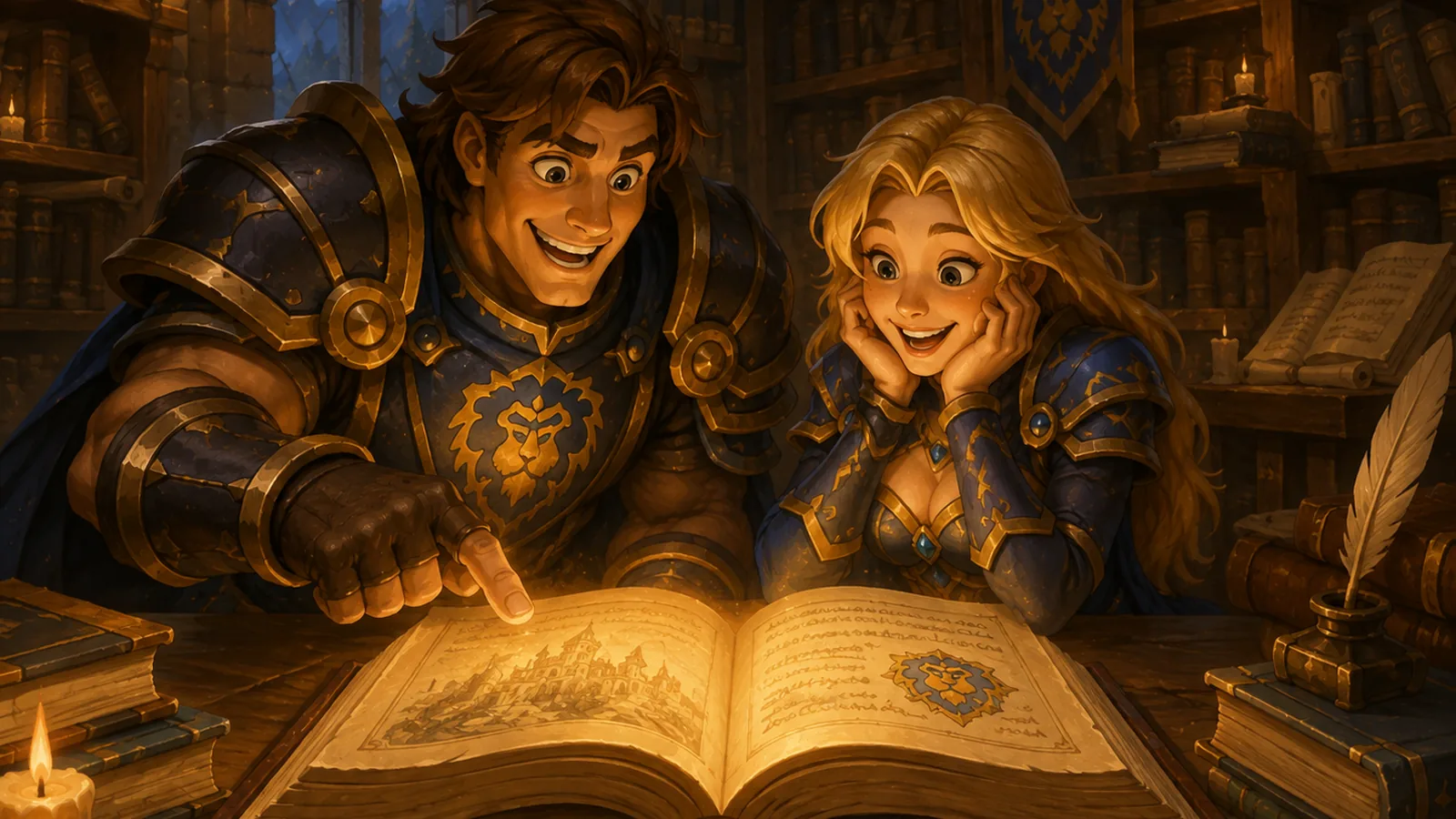
Lumikai Studio draws for a living, which shaped this project more than we expected. Every building, unit and landscape is painted rather than assembled, and the art brief is stricter than the game brief: a holding covers about a fifth of the frame and the land holds the rest. The world is supposed to look like it will still be there after your holding has fallen — which, in this world, has already happened once, to people who were better at it than you.
If the date moves, it will be said here, with the reason. A schedule nobody corrects in public is not a schedule.